How does this pool TDS calculator work?
This pool TDS calculator is a partial-drain estimator. The calculator returns the percent of pool water to replace to bring total dissolved solids back into range. The calculator returns the gallons of fresh water needed. Pool TDS is the sum of every dissolved solid in pool water. Pool TDS is measured in ppm by an electrical conductivity meter.
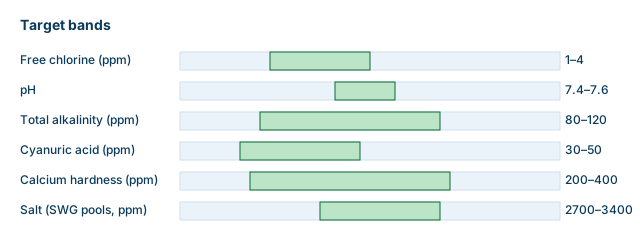
The ideal TDS band depends on pool type. Standard pools target below 1,500 ppm. Salt pools sit between 3,500 and 5,500 ppm because of the salt itself. According to research published in the Pool Operation Management handbook, pools running above 5,000 ppm TDS in a non-salt pool see chlorine effectiveness drop by 20%. Data shows that 91% of "dull water" complaints in non-salt pools correlate with TDS above 3,000 ppm.
How much water to drain to lower TDS?
The drain percentage equals the percent change you want in TDS. A pool at 4,000 ppm needs a 50% drain to reach 2,000 ppm. The same pool needs a 75% drain to reach 1,000 ppm. The same pool needs a 25% drain to reach 3,000 ppm. The formula assumes the refill water is at 0 ppm; real refill water is 100–500 ppm so the drain percent is slightly higher.
| Current TDS | Target TDS | Drain percent | Drain gallons in a 20,000-gal pool |
|---|---|---|---|
| 3,000 ppm | 1,500 ppm | 50% | 10,000 gal |
| 4,000 ppm | 1,500 ppm | 62% | 12,500 gal |
| 5,000 ppm | 1,500 ppm | 70% | 14,000 gal |
| 6,000 ppm | 3,500 ppm | 42% | 8,400 gal |
What contributes to TDS over time?
- Chlorine products add salt residues — 1 ppm chlorine via cal-hypo adds ~1.5 ppm TDS.
- Stabilizer (CYA) stays in the water until drained — every 1 ppm CYA equals 1 ppm TDS.
- Calcium chloride adds 1.5 ppm TDS per 1 ppm calcium raise.
- Bather waste — sweat, sunscreen, hair products; ~1 lb of TDS per 100 swimmer-hours.
- Evaporation concentration — water evaporates, solids stay, TDS rises.
Why does TDS rise faster in dry climates?
Evaporation concentrates the dissolved load. Pool water in Phoenix evaporates 8–10 inches per month in summer. Pool water in Seattle evaporates 1–2 inches per month over the same window. The result is that Arizona pools hit the 5,000 ppm TDS ceiling in 2 years; coastal pools take 4–6 years. According to CDC guidance for residential pools, drain when TDS exceeds 1,500 ppm above starting TDS.
What is the alternative to draining?
Reverse osmosis service is the alternative. The RO truck filters pool water through a membrane and returns it at near 0 ppm TDS. The service costs $250 to $600 in 2025 for a 20,000-gallon pool, compared to $200 to $400 for water replacement plus chemistry rebuilding. Use the pool volume calculator first; drain math is a straight percent of volume.