How does this pool saturation index calculator work?
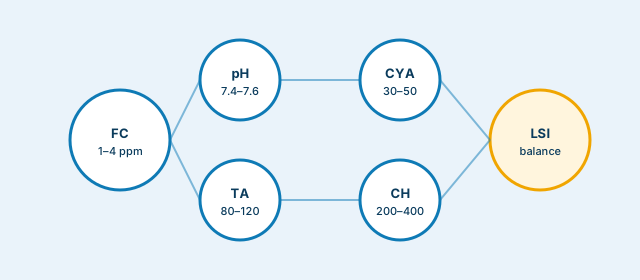
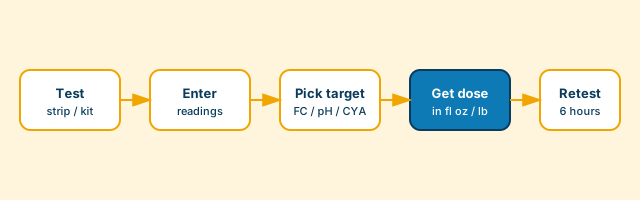
This pool saturation index calculator is a Langelier-formula tool. The calculator returns the LSI value from pH, temperature, calcium hardness, total alkalinity, and TDS. The calculator returns a label of corrosive, balanced, or scaling. Pool saturation index is the single best summary of water balance. Pool saturation index is calculated by the Langelier formula published in 1936.
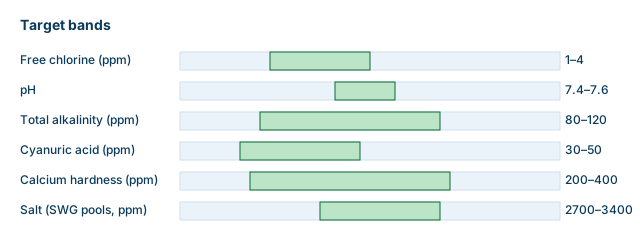
The ideal LSI band is -0.3 to +0.3. According to the Pool & Hot Tub Alliance handbook, an LSI below -0.5 corrodes plaster and metal at measurable rates. Research from the National Plasterers Council shows that pools held within ±0.3 LSI for an entire season show no measurable etching or scaling.
How is the saturation index formula computed?
The formula is LSI = pH + Temperature Factor + Calcium Hardness Factor + Alkalinity Factor − TDS Factor. The factors come from standard Langelier lookup tables. The temperature factor runs from 0.0 at 32°F to 0.9 at 104°F. The calcium factor runs from 1.0 at 50 ppm to 2.6 at 800 ppm. The alkalinity factor runs from 1.4 at 25 ppm to 2.5 at 800 ppm.
| Parameter | Range | Factor at low end | Factor at high end |
|---|---|---|---|
| Temperature (°F) | 32 → 104 | 0.0 | 0.9 |
| Calcium hardness (ppm) | 50 → 800 | 1.0 | 2.6 |
| Total alkalinity (ppm) | 25 → 800 | 1.4 | 2.5 |
| TDS (ppm) | 0 → 1000 | 12.1 (subtract) | 12.2 (subtract) |
| pH | 7.0 → 8.4 | direct add | direct add |
What does an LSI reading mean?
- LSI < -0.5 — water is corrosive; plaster pits, metal rusts, grout dissolves.
- LSI -0.3 to +0.3 — water is balanced; the green zone.
- LSI +0.3 to +0.5 — water is slightly scaling; calcium starts to precipitate.
- LSI > +0.5 — water is scaling; cell scale, heater scale, cloudy water.
Why does temperature affect LSI?
Hot water dissolves less calcium. Pool water at 90°F holds calcium at the saturation edge sooner than the same pool at 70°F. The result is that pools scale in summer and corrode in winter at the same chemistry readings. Research from the Pool & Hot Tub Alliance shows that a 20°F temperature swing shifts LSI by about 0.3 units. Adjust pH or alkalinity by season to track the band.
How do I fix a negative LSI?
The fix is in this order: raise calcium hardness first, raise total alkalinity second, raise pH last. The calculator returns the parameter that contributes the most to the imbalance, so the first adjustment lands closer to the band. Use the calcium calculator for the calcium step. Use the alkalinity calculator for the TA step. Use the pH calculator last.